
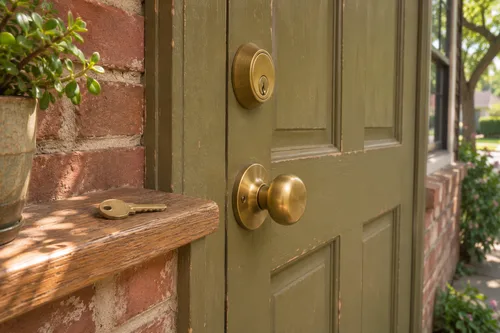
Tell us where access stopped
Think back to your last ordinary use of the door. Maybe it shut normally when you left and you realized later that the key was inside. Maybe the key entered all the way, but the deadbolt stopped halfway through its turn. You might have a handle that moves while the latch stays put. Give that sequence in your own words. It helps the person taking the call understand whether the issue is lost access, the hardware itself, or a door that has shifted against the frame.
Mention any damage you can see without touching the opening. A cracked jamb, a loose handle, or a key that broke in the cylinder changes what someone can assess at the visit. Leave damaged hardware alone until it can be assessed. If you can enter through a different authorized door, say so. Getting into the property and restoring the intended entrance are two separate decisions you can discuss during the call.
Give the entrance you can reach
Around Watt Avenue and Folsom Boulevard, the address on a map may lead to the street side of a building even when you're waiting in the parking lot. Say which street you turned in from and whether someone can meet the technician outside. If you're near Watt/Manlove station, use it as a reference and then give the actual address, entrance, or lot. A direction like the south driveway off Folsom Boulevard is useful only if that is where you can actually meet.
For a Rosemont apartment, include the building and unit numbers, and say whether the gate, lobby, or apartment door is the obstacle. If you're in a Sacramento parking structure or service alley, give the garage name or cross street, level, and stall or loading area. Stay somewhere you can be reached by phone and where a technician can stop without blocking traffic. If the gate itself requires approval, arrange that with the person who manages it while you're waiting.
Ask for the scope before the visit
A useful emergency estimate identifies the initial task and the charges that may apply. Ask whether the visit and labor are separate, and what the quote assumes about the lock being serviceable. If the key is inside, tell the person taking the call. If you already tried a working key and it failed, share that too. Give the same details when you compare estimates so you're asking each provider to quote the same job.
If the condition on site changes the work, ask for a revised scope and total before approving it. Entry alone may be enough when the key is still in your house and the lock works normally. A loose cylinder or a bolt that still binds after entry deserves a separate explanation. Our notes on what to ask before booking a locksmith can help you write down the right questions without slowing the initial call.
If service involves a car, a house door, and a key that opens both a gate and another entrance, decide which problem prevents access right now. The person arranging the visit can record the other concerns separately. Someone with a working key in another part of town might be able to help later, but you can still agree on which door you need to use first. Tell us if your phone battery is low or the person making the request is leaving the property, and give another callback number if you have one.
A vehicle call needs a few extra facts
Have the year, make, and model ready. Explain whether the keys are visible in the vehicle, lost, or physically damaged. Tell us whether you are trying to enter the cabin, reach the trunk, or get the vehicle started again. Those needs can involve different equipment or a separate appointment. A key in the cabin is different from a missing smart fob, even if both leave you standing in the same parking space.
Tell us where the vehicle is parked before anyone makes a plan to bring equipment. A narrow driveway off Kiefer Boulevard and a garage below a Sacramento office building are very different places to work. The vehicle might be facing a wall, the gate could have a height limit, or a second contact may need to let the technician into the lot. Our automotive locksmith service explains what to ask when you need to start the vehicle as well as open it.
Check the door after access is restored
Before you end the visit, make sure you can open, close, and lock the door in the way you and other authorized users normally need to use it. If you arrived because the key was inside, make sure the same key still works. If the latch dragged or the bolt stopped partway through its turn, report that symptom again while it's easy for the technician to see. Opening the door once may leave an unrelated problem with closing it.
If a key is unaccounted for, decide which other locks it operated before requesting changes. Planned rekeying may make sense after a lost key or a move when compatible hardware is in good condition. If the hardware itself has failed, ask about that first. The handoff points in our lock rekeying service can help you separate immediate access from the longer-term decision about who keeps a working key.
Common questions
What if my child or pet is locked in a vehicle?
If there is an immediate danger, call 911 first and follow the dispatcher's directions. Give your precise location and explain who is inside.
Can I ask to have the lock opened without changing it?
Yes. Say that you're requesting entry and want to keep the existing hardware if it can still operate. Ask about any extra work and its cost before approving it.
Can an employee meet a technician if the owner is away?
An employee can give the location and describe what happened. Arrange for the owner or other authorized person to confirm the request and approve any work that goes beyond opening the door.
To ask LockReach for emergency locksmith service, call 916-233-0888 with the location you can reach and the best number to call back. Tell us what is preventing authorized access and what you need to be able to do once the door opens.