
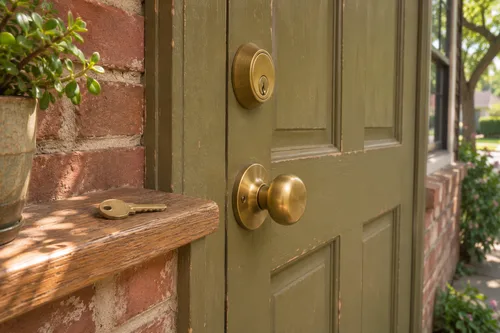
Watch what the door does as it closes
Move through the entrance the way you usually would, provided the door is safe to use. Notice whether the door catches on the frame before the latch reaches the strike. The strike is the plate on the frame that receives the latch or bolt. If you have to pull the handle toward you, lift the door, or lean into it before the key will turn, explain that. Those details can direct the assessment toward fit in addition to the lock itself.
If the bolt turns freely while the door stands open but binds once it closes, note the difference. If the key won't turn in either position, mention that too. The useful report is the symptom you can repeat during normal operation, so the person taking the call can understand when you feel resistance. Avoid forcing the bolt, and mention any splintering, loose hardware, or visible crack around the lock before treating the door as secure.
Name the entry your household actually uses
A front door facing a residential street off Kiefer Boulevard may be easy to identify by address. The lock you need assessed might be at the side gate, the kitchen entry, or the door between your home and its attached garage. Give the street address first, then tell us where you normally enter and whether there's a working door we can use to reach the affected opening. A clear path matters when the front gate and the actual job are on different sides of the house.
If you're in a duplex, an apartment, or a home with a separate unit, distinguish private doors from a gate or corridor shared with other residents. The person who controls the private unit may have no authority to change the common entry. Tell the owner or property manager which door is involved, and ask who should approve the work. If the closing problem affects an essential exit, say that when you call so the person taking the request can account for it.
Choose between keeping the lock and changing it
If the hardware works and all you want is a different set of keys, ask about lock rekeying. A compatible cylinder can be set to operate with a different key while the usable parts of the lock remain in place. That can make sense after a move or another access handoff. It won't correct a bolt that has to be pushed into the strike or a handle that no longer returns normally.
Replacement may make more sense if the cylinder is damaged, a key will not operate reliably, or the hardware is incompatible with the result you want. Ask which part needs work before deciding that the entire lock must go. A lockset includes working parts and visible pieces that may affect the fit of the door. If you want to keep a finish or handle shape, tell the technician so that appearance and function can be considered together.
Make the decision door by door
Think about how each person enters or leaves the home. Someone carrying groceries may use a side entrance most. A guest might need the front door. A household member may rely on a lever they can operate comfortably. If you're changing multiple locks, say which doors you want to work the same way and which ones should remain separate. A detached shed or private gate may belong on another key even if it sits a few steps from the house.
Set aside any door that needs a different kind of work. If an existing overhead garage door won't travel when you press its control, that's a different problem from the keyed walk-through door between the garage and the house. Tell us which opening you mean. For symptoms from the overhead door, our garage door repair page explains the information to collect about the door position, movement, or opener response.
Help the visit start with the right information
If you can take a picture from a normal standing position, a wide photo of the door and a close photo of the hardware may help explain the job. A photo of the latch side can be useful when the door is already open. Keep your keys and any visible codes out of the photos you share. Mention whether the door is wood, metal, or another material, and whether the hardware appears to be original to the door or has already been changed.
A household moving along the Folsom Boulevard corridor might be coordinating inspection access, deliveries, and new keys on the same day. Decide which entrances need to stay available and who's responsible for collecting the keys afterwards. Apply the same idea to a smaller job. If only one door stops locking, agree on who will be there to test it and how others who use that entrance will know what changed.
Before a visit involving several doors, tell us if you want only the problem entrance assessed first. You can also send a short note about any other hardware that works under certain conditions. A patio door that only becomes hard to lock late in the day may have a different symptom from a deadbolt that has always needed extra pressure. Use the words that describe how someone in the household experiences the issue. That can help set an order for checking the openings while keeping the entrances you need in use.
Make sure the repaired opening fits daily use
Discuss what you should be able to do when the work finishes. That could mean turning the key from outside without leaning on the handle, latching the door with an ordinary push, or using a new key at two compatible doors. Test the opening with the person who usually operates it. When the work affects more than one entrance, try each door separately and confirm that any lock you intentionally excluded still works with its intended key.
If you are deciding about work after a move, the rekey or replace guide walks through the handoff in a few steps. Keep the written scope or invoice with a list of the doors that changed. Months later, it can help you explain whether a recurring symptom involves the same cylinder, another entrance, or a door that still needs alignment. Keep records about who holds keys private.
Common questions
Can I keep the hardware I already have?
You may be able to if it's compatible with the work you want and in working condition. Tell us what you want to keep and describe the symptom before you request a replacement.
Why does my deadbolt work with the door open?
If it binds only when the door closes, the bolt may be contacting the strike or frame. Share that detail so the fit can be assessed alongside the hardware.
Who should request work at a rental?
Contact the property owner or manager for approval, especially for a shared entrance. The person with that authority should be available if the work changes the lock or affects other residents.
If the door sticks when someone comes home or just as they are leaving, LockReach can use that detail to start the conversation. Describe what happens at 916-233-0888 so the visit addresses the opening you actually need.