
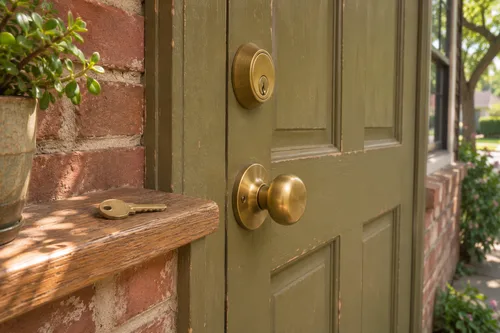
List the cylinders, then the doors
A single door can have a keyed handle and a separate keyed deadbolt. Those are two cylinders, even if the same key opens both now. Walk the property and count each keyed part you want assessed. Include the garage entry into the house, a side door, a private gate or shed, or a receiving entrance to a shop if it belongs in the change. You can describe each cylinder by location and function. You don't need to know the manufacturer to start.
Ask which doors use a different key and whether anybody still needs access through them. If you are taking over a Rosemont house, consider what the previous resident needed as well as how you plan to enter. A quote for eight locks at a Sacramento address could cover eight cylinders across four doors or one cylinder on each of eight openings. The distinction matters when asking what work and labor are included in a quote.
Tell us which keys work now
A working key helps establish what the cylinder is already able to do. Say if the key turns normally, stops short, or works only while you push against the door. If you've already tried it with the door open and closed, report the difference. Use names like front deadbolt and kitchen handle instead of marking the key itself with the property address. For a door that sticks, our residential locksmith page explains the fit information that helps a technician assess the problem.
Rekeying changes how a compatible cylinder recognizes the key. It generally keeps the visible handle and lockset in place when their condition allows it. If a handle is loose, a latch does not return, or a deadbolt rubs the strike, mention the symptom so the technician can consider it separately from the key change. Problems coming from the door, frame, or other working parts of the lock may still need attention after the cylinder has a new key.
Plan who can approve the change and when
For a home handoff, find out when the buyer or incoming resident is allowed to change access and who can let the technician in. A delivery window, a property inspection, or a relative holding a working key may affect the order of work. Let the people involved know which door they should use while the visit is underway. Take the same approach at a shop changing tenants. Agree on the time an outgoing key should stop working and who's responsible for collecting the working keys.
If your address is off Kiefer Boulevard or in a building that uses a Folsom Boulevard mailing address, give the specific entrance and the person who can get to it. A driveway beside a gated yard might be more useful than the front of the building. A common entry in a multi-unit property may belong outside the scope until the owner or manager gives approval. Do not assume a key to a private unit gives permission to change a communal cylinder.
Sometimes the easiest handoff is to agree on one entrance first. If a seller still needs to retrieve something or a vendor is arriving, ask which door can stay in use while the others are assessed. For a property with no working key to one cylinder, identify which door that is before someone starts testing the rest. A list grouped by floor or by the side of the building often saves more time than a bag of unmarked keys. The written list should make sense to the person who takes over access afterward.
Ask what the estimate covers
Give the count of cylinders, a short note on their condition, and the key arrangement you want. Ask whether the quote includes the visit, labor per cylinder or per job, and how many new keys are included. If you need an extra assessment of a loose handle or a door that drags, ask if that will be separate. When a technician finds hardware that won't work with the original plan, ask for options and the updated scope before approving changes.
Check that any estimate you compare includes the same doors. A quote for four deadbolts and four handles differs from a quote for four cylinders plus a visit. Ask each provider which assumption they are making. If you would keep two locks and replace a third, have the quote reflect the decision for each opening. Our rekey-or-replace guide can help you make that list before calling.
Test the new arrangement before the handoff
Try each serviced door with its intended key, both open and closed, using normal hand pressure and leaving an authorized way back in. If an old key is available, ask the technician to demonstrate that it no longer operates the rekeyed cylinders. Then test an untouched door with its original key if that door was meant to stay separate. Give new keys directly to the people who should have them, and privately record which entrances were changed. This is especially useful when several people enter through different doors in the same building.
Common questions
Does a rekey make a sticking lock easier to turn?
Only if the issue is related to the work on the cylinder. A bolt that rubs when the door is closed may have a separate fit issue. Report that symptom before booking.
Can two doors use the same key afterwards?
They may be able to if the cylinders are compatible and both are part of the job. Tell the technician which doors you want grouped and which should stay separate.
Should a tenant book rekeying without telling the owner?
Ask the property owner or manager who can authorize the work before booking. A shared entrance may need separate approval even when the private unit lock is in scope.
A list of doors and keys gives you a concrete starting point. At 916-233-0888, LockReach can discuss the cylinders you want assessed and the access arrangement you want to hand over.