
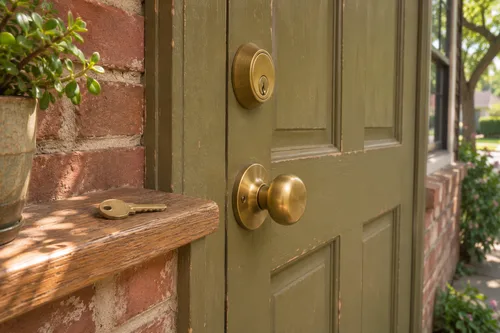
Walk the entrances before you make a list
Start where you'll usually enter. In a house near Kiefer Boulevard, you might park beside a door on the side instead of using the front entrance. List that door, the front door, and any private opening used by the outgoing resident or tenant. At a shop taking over a space along Folsom Boulevard, include a receiving door if it's part of your lease. Ask the manager about any entrance shared with other tenants.
Count the keyed parts separately. A handle and separate deadbolt can mean two cylinders on one door. For each cylinder, note whether you have a working key and what you want the new arrangement to be. If your intent is to keep the shed separate from the house, tell the technician before the work begins.
Let the condition of the door guide the choice
Try a working key under normal conditions if you can do so while keeping authorized access. Notice if a deadbolt turns freely while the door is open but binds after closing. That can point to the way the bolt reaches the strike on the frame. A sticking handle or visibly loose hardware also deserves attention. A new key won't necessarily resolve a problem in the frame or latch.
Ask whether the current cylinder can be retained and whether multiple locks are compatible with your intended key arrangement. If replacement comes up, ask which part needs to go and why. You may care about the finish, but how the door fits and latches matters to daily use. Our residential locksmith page gives more detail on telling a hardware symptom from a fit issue.
Coordinate the day keys change hands
Confirm when you can authorize the work and who can let the technician in. For a rental, check with the owner or property manager before changing a lock. If the movers, seller, or outgoing tenant still need access, agree on the order rather than changing everything as soon as you arrive. Decide who can test every door and receive the keys at the end.
When comparing costs, use the same list of cylinders for each estimate. Ask about the visit, the work for each cylinder, and how many working keys are included. At the end, test every changed cylinder with the intended key and check any door that was supposed to remain separate. Keep a private note of the doors that changed and who received keys.
Common questions
Can I use one key at the front and side doors?
Ask about compatibility and list both cylinders in the scope. Leave any entrance you want to keep separate off the grouping request.
Do I have to replace every lock when I move?
Assess each lock on the opening you use. A working compatible cylinder might be kept, while another door needs repair or different hardware.
If the locks work and your only concern is who has access, start with lock rekeying. If the door already binds or the hardware is damaged, report that before deciding.