
Decide where people should wait
Stay clear of the opening if the door is up, tilted, or stopped partway. Look for another normal way into the house rather than walking beneath it. Tell anyone else at the property that they should leave the affected door out of use. If a car is inside, report that when you call. The fact that a vehicle is blocked in is important for planning the situation, but it does not make moving a damaged door safer.
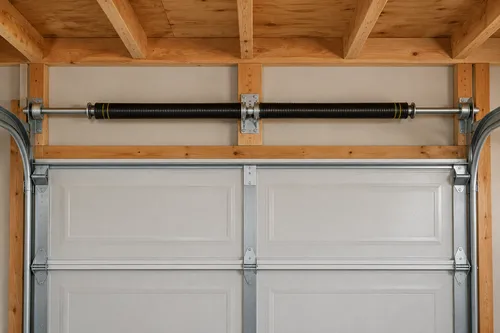
Do not handle springs, cables, or the mechanism around them. Parts of the lifting system can be under tension even if the door has not moved for hours. Avoid pulling on a release or asking another person to lift the door to see whether it is heavy. If you already heard a sound or saw a gap from a safe spot, pass that along. A photograph is optional, and only useful if it can be taken without approaching the opening.
Understand why the opener may still respond
Garage doors are heavy, especially wide doors or doors made of several sections. The spring system helps offset that weight during travel. An opener normally moves a door whose weight is already balanced by the rest of the system. A powered unit may still light up or make its usual starting sound when it receives a command, even though something has changed in the door. A working remote signal does not settle whether the opener itself is at fault.
If a door began to move and then stopped, say how far it went only if you already know. If the door rose normally before a noise and did not move again afterward, describe the timing. An uneven position can also result from trouble elsewhere in the lifting or guiding hardware. An assessment is needed to separate those possibilities. For a broader look at the door's condition, see garage door repair.
Give the strongest facts without a spring test
A description can start with the design you already see from outside. Is there one wide opening or are there two smaller doors? Which of them stopped? Was the sound while it opened, while it closed, or while it was still? If a spring is exposed and you noticed an obvious separation from a safe place, share that observation. If the hardware is not visible, leave it to the assessment.
Mention whether the door has windows or unusually heavy sections if that is already familiar to you. Tell us about a spring repair or other recent work if you remember it, especially if the door changed afterward. Equipment that looks similar can be built for different doors. Details from a prior invoice may help identify what is installed, but the information still needs to be tied to the actual opening before choosing parts.
Say whether the door was moving smoothly before the failure. A spring can be part of the problem while an older track, roller, or cable needs separate attention. If the prior symptom was an occasional jerk, say how long you noticed it and whether it affected opening, closing, or both. This leaves room to assess the whole system without treating every visible sign as proof of the same failure.
Ask what a spring estimate includes
Find out what would be assessed and which work is proposed for your door. Ask whether the visit, labor, parts, and safety or operation checks appear separately or are included in the same total. If the estimate describes more components than you expected, ask how each one relates to what was found. This is especially helpful on a wide door where a quick price offered by opening size alone leaves important details undecided.
If two proposals differ over whether one component or more should be addressed, ask for the reason in each case. Useful differences may include the door's setup, the actual condition of the other hardware, and part compatibility. Ask how the balance and travel would be checked after the work and what is outside the scope. A term on an estimate is only useful if you understand where it fits on your existing door.
Clarify how a change in the work will be handled. If the assessment shows damage in another part of the system, ask which checks led to the revised scope before you authorize it. If you rent the property, identify who can approve that change. Keep an agreed entrance or contact method available so the person at the door can reach the decision-maker if something turns up during the visit.
Make a Rosemont address work for the visit
If the street address uses Sacramento, say the garage is in Rosemont and name a useful cross street near Kiefer Boulevard, Folsom Boulevard, or your actual approach. A small description of the site can prevent confusion. A door may face a side driveway even when the front entrance is easy to find. Say where the safe meeting point is, especially if the affected opening looks partly open from the street.
For a shared building, identify which door is affected and who can provide access from the usable side. Tell LockReach if there is a narrow driveway, a gate, or a vehicle in the affected garage. If your address falls inside the city of Sacramento, garage door spring repair Sacramento also covers what to ask about a wide door, an inaccessible vehicle, and the scope of a local assessment.
If you are not at the property, ask the person who noticed the problem to describe it from where they were standing. There is no need to send them back into the garage for measurements or another attempt. Put them in touch with the person who can authorize work if their roles differ.
Common questions
Does a loud bang prove the spring broke?
No. The sound, current door position, and any visible change can be reported, but the lifting and guiding parts need to be assessed before naming the cause.
Can I open the garage just once if the car is inside?
Leave a suspected damaged door where it is. Do not try to move it by hand or with the opener. Report the blocked vehicle and an alternate entrance when you call.
Do you need the spring dimensions when I call?
No. Share any equipment information you already have, but do not approach or measure the spring. The affected door and what happened first are better starting points.
What is useful to compare between spring estimates?
Compare the work described, the parts and labor included, and the planned checks for balance and normal travel. Ask what would lead to a change in the scope.
Call LockReach with the door position, the last change you noticed, and a safe approach to the garage. A repair discussion can start without anyone touching the lifting hardware or operating the door a second time.