
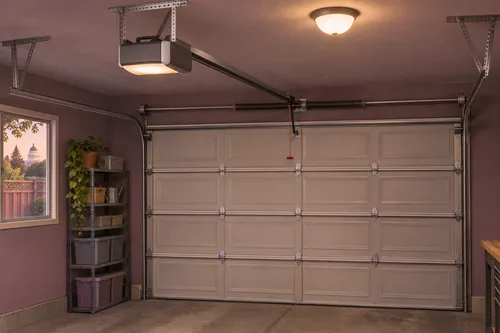
A partial response points to what to describe next
Think about the last trip you saw. Perhaps the wall control still worked when the remote had stopped, or the opener lit up but the door did not move. Name the control and when you saw the response. If the same remote serves more than one door, say which button normally works the affected opening. Do not repeat a command if the door is out of line, visibly damaged, or stopped partway in a way that seems unsafe.
An opener can receive a command even when something in the moving door is preventing normal travel. A light, a click, and sustained motor noise are different observations. Say what you heard and whether the sections remained still, traveled a few inches, or moved to the same spot before reversing. That helps separate a missing command from a problem that appears after the door is asked to move.
Explain whether you noticed a similar problem before any recent outage, remote change, or repair. A door that failed only for one household member can have a different history from a shared opening that ignores every known control. Mention how often the issue happened while it was still in normal use. If your recall is incomplete, the one incident you remember clearly is more useful than guessing.
Use direction and timing to discuss safety sensors
An opener often uses sensors near the opening as one part of its closing safety system. Describe whether the door reversed right after you gave the command or only after it had traveled some distance. If you already saw a light flash or something in the opening, mention that. A problem in the way the door moves may also affect its behavior on closing, so an unexpected reversal should not be assigned to a sensor based on one observation.
Do not block, disconnect, or bypass a safety device to get the door to close. Avoid trying to troubleshoot around a crooked, loose, or damaged door. Keep people from passing underneath and report its current position. If you heard a sharp bang followed by a loss of lift, garage door spring repair Sacramento explains what to tell us about the door and a possible balancing issue.
Reach the actual garage at a Sacramento address
Provide the address and what makes the approach different from the front entrance. A garage at an East Sacramento house may be behind the front of the property or open toward another street. A garage serving a Downtown building can have a separate vehicle entrance and a specific place to meet. Use the side, bay, or floor when needed, and be explicit if a door should not be approached from the vehicle entrance.
If you are in Natomas or elsewhere in the city, explain whether the driveway is private or controlled by a gate. In a shared property, find out who can let a visitor in and who authorizes work. If the garage door cannot close, keep the opening clear and say if it is the only regular entry. If there is a car inside, mention it when you call so the discussion can account for that.
Make the estimate answer the original question
Ask what symptom the work is intended to fix and whether both the controls and door travel were assessed. If a part is proposed, ask how compatibility was verified and whether the existing safety features will be checked afterward. Confirm what parts and labor are included and whether a visit charge stands separately. If a door and an opener problem are both found, separating them in the estimate helps you understand why each item is there.
Intermittent problems deserve a clear explanation too. Ask whether a proposal is based on a fault seen during the assessment or on the history you reported. If it does not appear during the visit, explain the circumstances when you saw it, such as using a particular control or noticing the door reverse just after it started closing. The aim is to make the proposed work specific to the equipment and the behavior you want corrected.
Be ready to connect an owner or manager
A tenant may observe the issue while the owner holds the equipment history. Give LockReach the safe approach, the current door position, and a callback for whoever can authorize work. If several people use the garage, tell them which opening should remain out of use. For a broader look at the parts of the existing door, see garage door repair Sacramento.
Common questions
Does a flashing opener light identify the problem?
It can be a useful detail, but it does not by itself identify the fault. Note when it flashed and whether the door started, stopped, or reversed.
Why could one remote stop working while the wall control still works?
The equipment may still be able to move the door in response to one control. Report which control last operated the affected opening normally and which did not respond.
Should I replace the opener after speaking to the manufacturer?
Share what the manufacturer found or recommended. The existing door, safety equipment, controls, and opener can then be considered together before work is planned.
What if this is a shared Sacramento garage?
Give the actual entrance and bay, explain who controls access, and arrange an authorized contact. Report a blocked vehicle or a door left in an unsafe position.
Call LockReach with the Sacramento address and what happened at the last normal operation. A clear account of the controls, door travel, and approach can help clarify what the existing opener needs.